
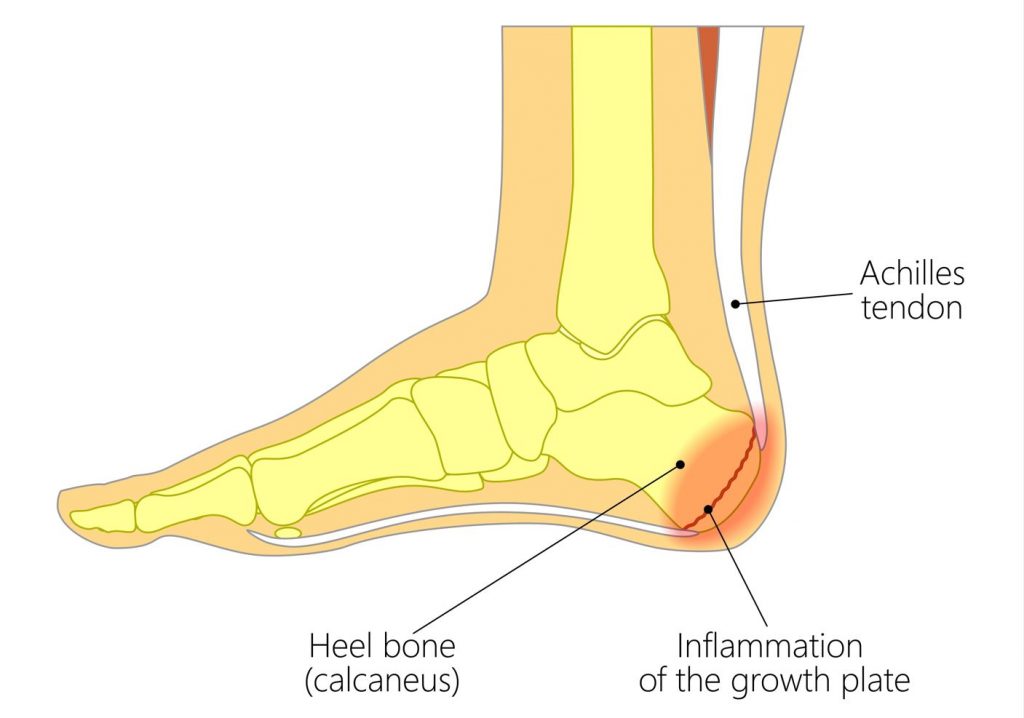


Sever’s disease or calcaneal apophysitis is a type of osteochondrosis that causes heel pain in children between the age of 8 to 14 years. This condition occurs when the Achilles tendon (the tendon that attaches to the back of the heel) pulls on the growth plate of the heel bone (calcaneal apophysis), resulting in swelling and inflammation of the growth plate.
Sever’s disease often occurs in active children and is more common in boys than girls. Children affected by Sever’s disease commonly complain of pain under the heel or at the back of the heel. In the early stages, the pain would normally occur only after high-impact activities or sports, but as the condition gets worse, the pain would eventually cause the child to limp even without activity.
As Sever’s disease is caused by the traction of the Achilles tendon on the growth plate, any factors that will increase the traction of the Achilles can cause Sever’s disease to occur.
Causes of Sever’s Disease include:
Signs and symptoms of Sever’s disease vary depending on severity. In the earlier stages, affected children will usually complain of pain after activity and the pain will resolve by the following day. If left untreated, the pain can severely limit their level of activity and quality of life.
Signs and symptoms include:
There are several other conditions that present similar to Sever’s disease, and it is important that the Podiatrist is able to differentiate Sever’s disease from other conditions. Diagnosis is always the key to the right treatment.
Other conditions of paediatric heel pain include:
Treatment of Sever’s disease usually involves addressing all the underlying factors or causes. It is important to understand that children will not be able to “grow out of it” but the condition will resolve fully when the growth plate fuses around the age of 14 to 15 years. Treatment is necessary to ensure that the child can take part in normal activities and not be limited by pain.
Treatment Options for Sever’s Disease include:
